ETG Landwork provides driveway grading and preparation in Charlotte and Union County, building the compacted, properly sloped base that gravel and concrete driveways need to last. Concrete crews in the area already call owner Luis Gallardo to grade their driveways so they can come in and pour, and homeowners use him for new gravel drives, long rural driveways, and regrading old ones that wash out every storm. From homesites in Waxhaw to farm properties outside Monroe, call for a free estimate.
Free Estimates
Owner-Operated
Se Habla Español
Residential & Commercial Projects
01 / 6
Signs Your Driveway Needs Grading
A driveway with a bad base gets worse every rain. Water finds the low spots, carries off gravel, and softens the ground underneath. Call when you see:
Potholes that come back right after you fill them.
Ruts, washouts, or gravel running into the yard or the road ditch after storms.
Water pooling on the driveway or flowing toward the garage or house.
A steep section where tires spin or gravel slides downhill.
A new homesite that needs a driveway path cut before the builder starts.
A concrete pour scheduled, with no graded, compacted subgrade ready.
02 / 6
What Driveway Preparation Actually Involves
Driveway preparation is the earthwork under the surface: clearing the path, building a firm subgrade, and shaping it so water runs off instead of soaking in. The route is laid out first, including width, turns, and where it meets the road. Trees, stumps, and roots in the path come out, along with the topsoil, because organic soil underneath is what causes sinking and soft spots. The subgrade is then cut and filled to grade and compacted with a compact track loader and compaction equipment. Drainage gets built in at this stage. Gravel drives are crowned so the center sits higher than the edges; the Federal Highway Administration’s gravel roads guide recommends a crown of about half an inch per foot, roughly 4 percent. Ditches or swales carry water along the sides, and culverts go in where the drive crosses a low spot or a road ditch. For gravel driveways, geotextile fabric can be laid on soft clay before the base stone, and the stone is spread and compacted in layers. For concrete, the subgrade is graded to the depth and slope the concrete crew specifies, so they can form and pour.
03 / 6
Our Driveway Grading Process
Step 1: Walk the Route
Luis walks the planned or existing driveway with you, looking at slope, drainage, soft spots, and where water goes during a storm. For a new drive, he marks the route, width, and turnaround. You get a written estimate that lists clearing, grading, drainage, and stone separately.
Step 2: Locates and Road Connection
We request an NC 811 locate before digging. If the driveway connects to a state-maintained road, NCDOT has rules for driveway connections, and the local district office decides what’s required; we’ll help you check before work starts.
Step 3: Clear, Strip, and Cut the Subgrade
Vegetation, roots, and topsoil come out of the driveway path. The subgrade is cut and filled to grade, and soft spots are dug out and replaced with firmer material.
Step 4: Compact and Shape for Drainage
The subgrade is compacted, crowned or sloped to shed water, and side ditches or swales are shaped. Culverts go in where water has to cross under the drive.
Step 5: Base Stone or Concrete-Ready Handoff
For gravel, the base stone is spread and compacted, then topped. For concrete, the subgrade is checked against the crew’s specs and handed off ready to form. Either way, you walk the finished drive with Luis.
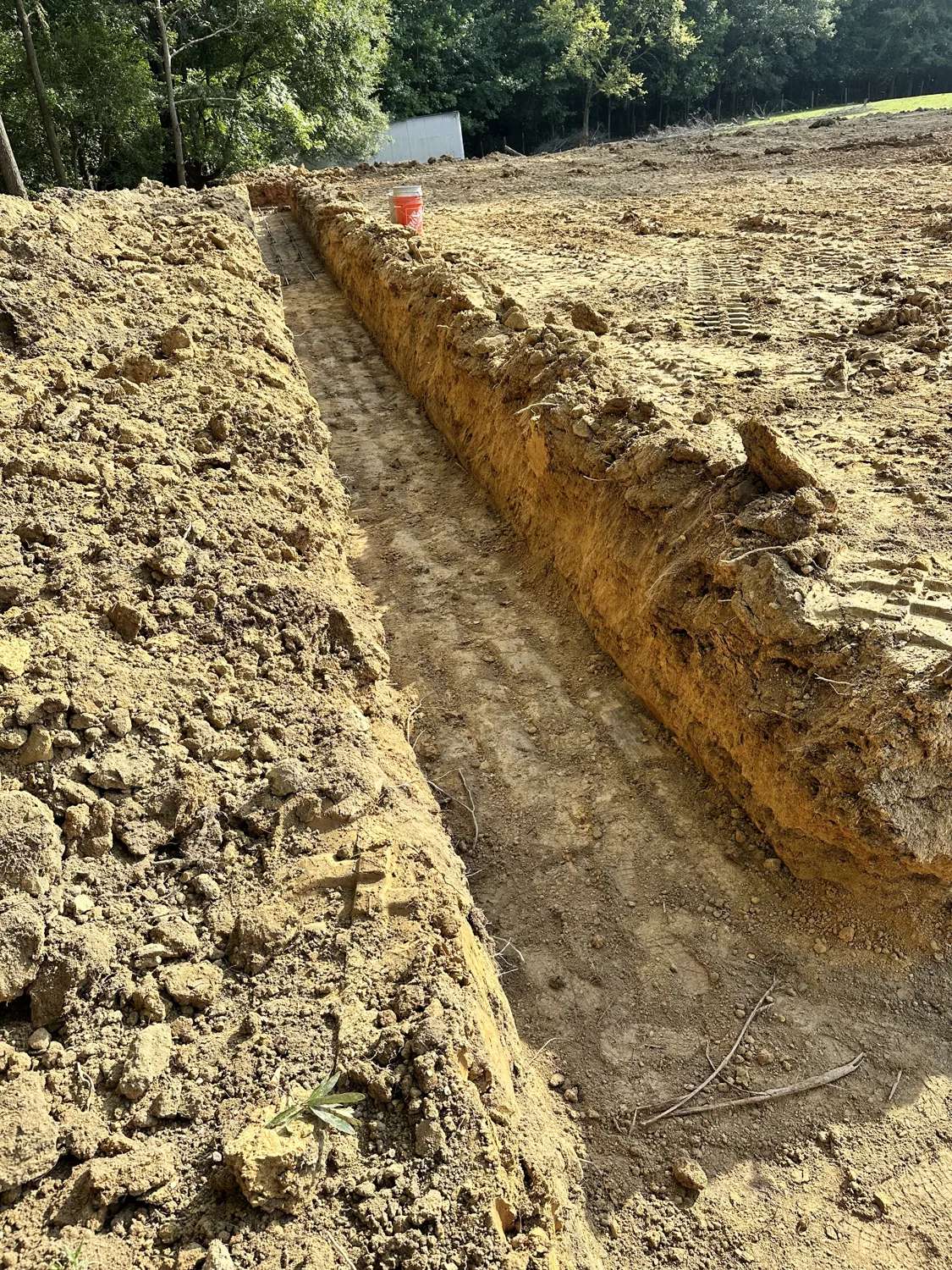
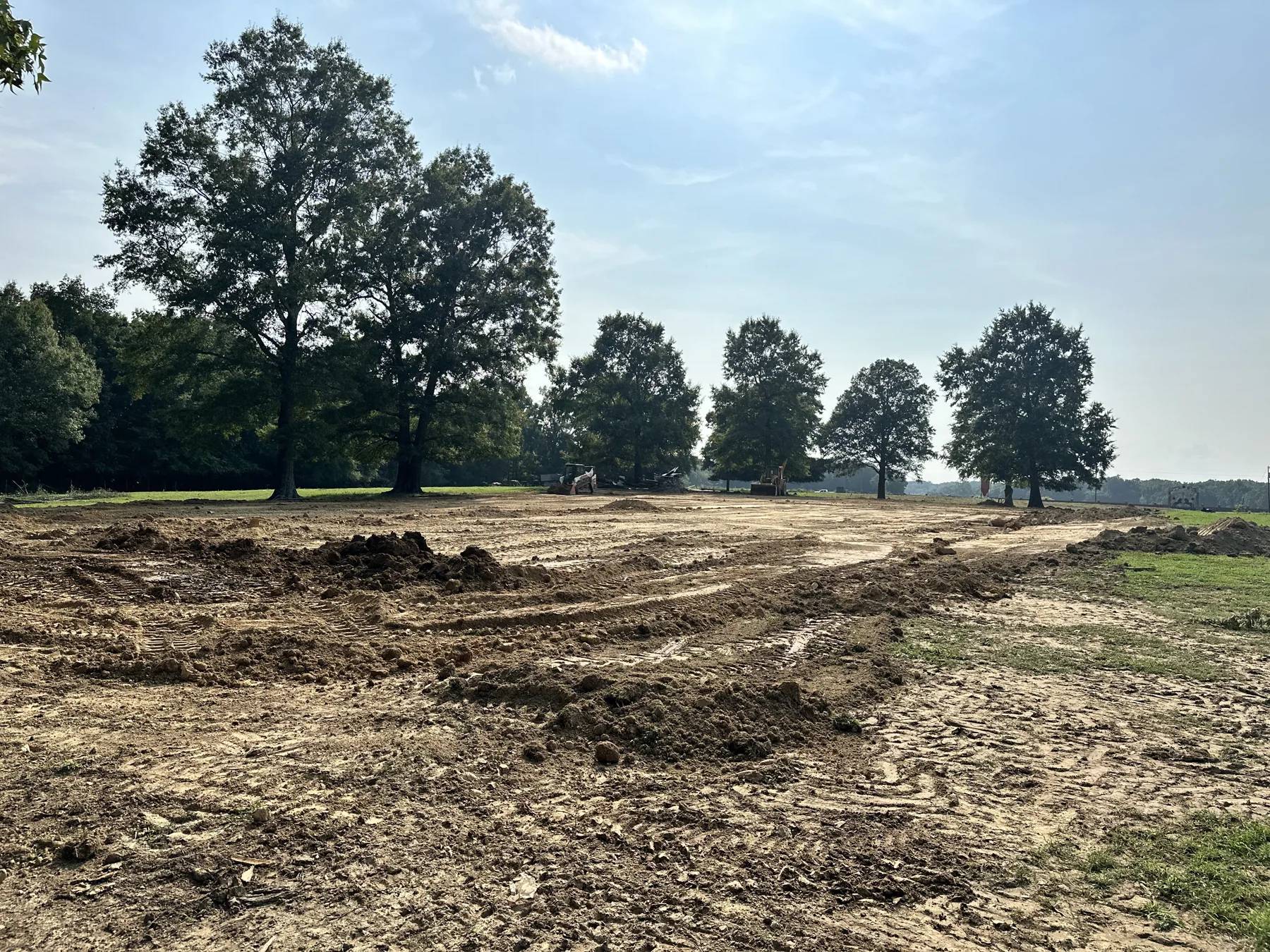
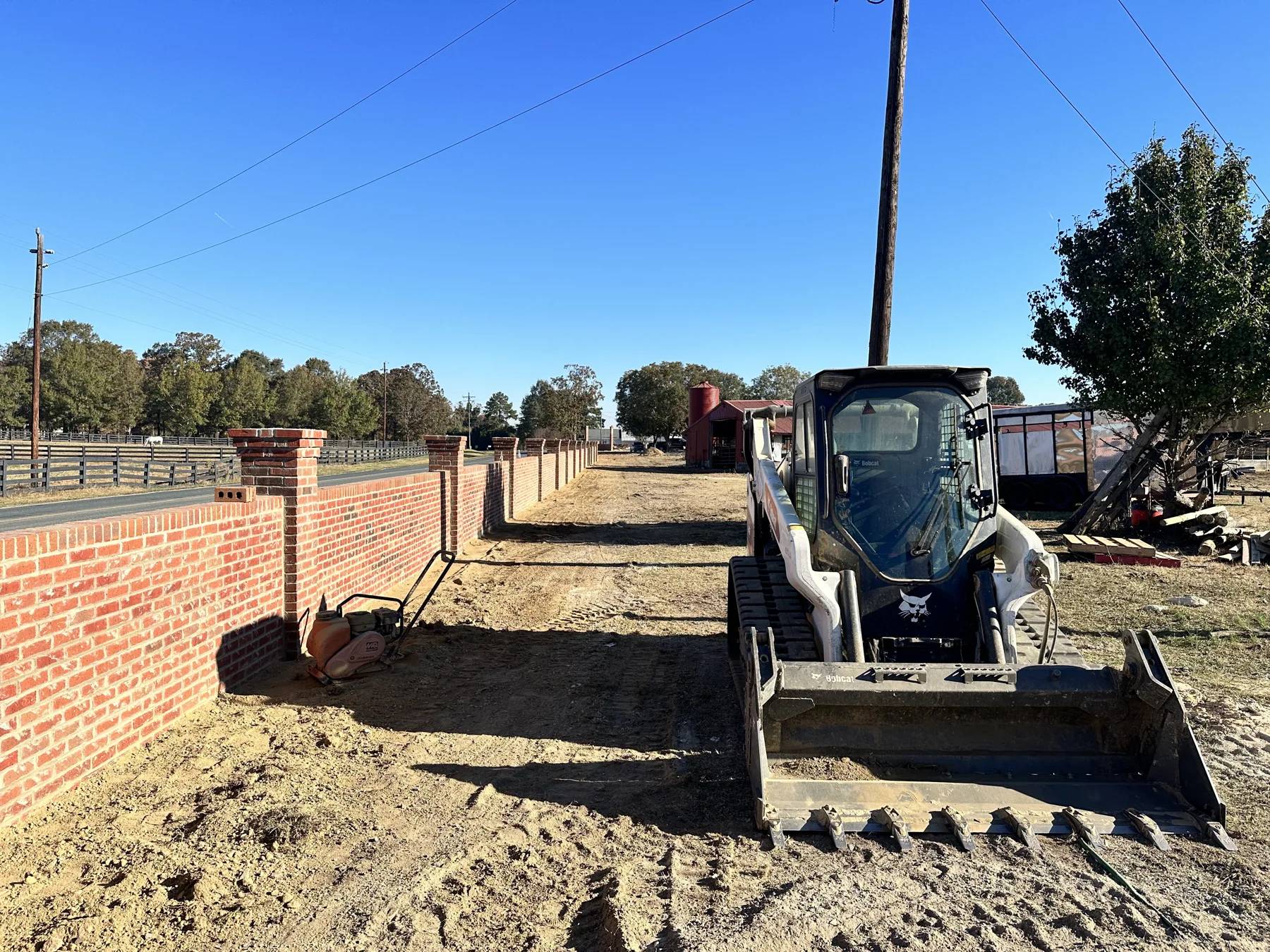
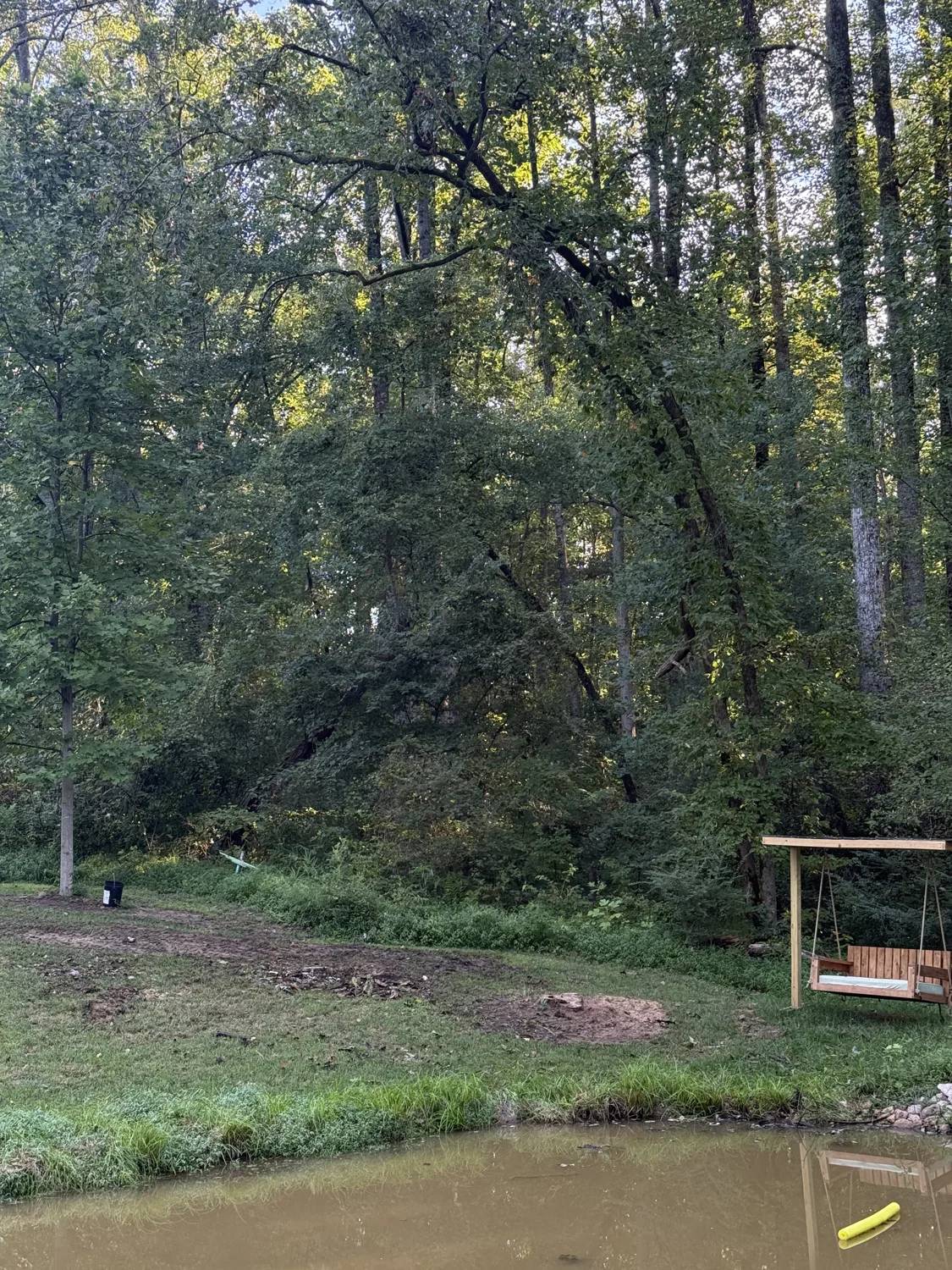
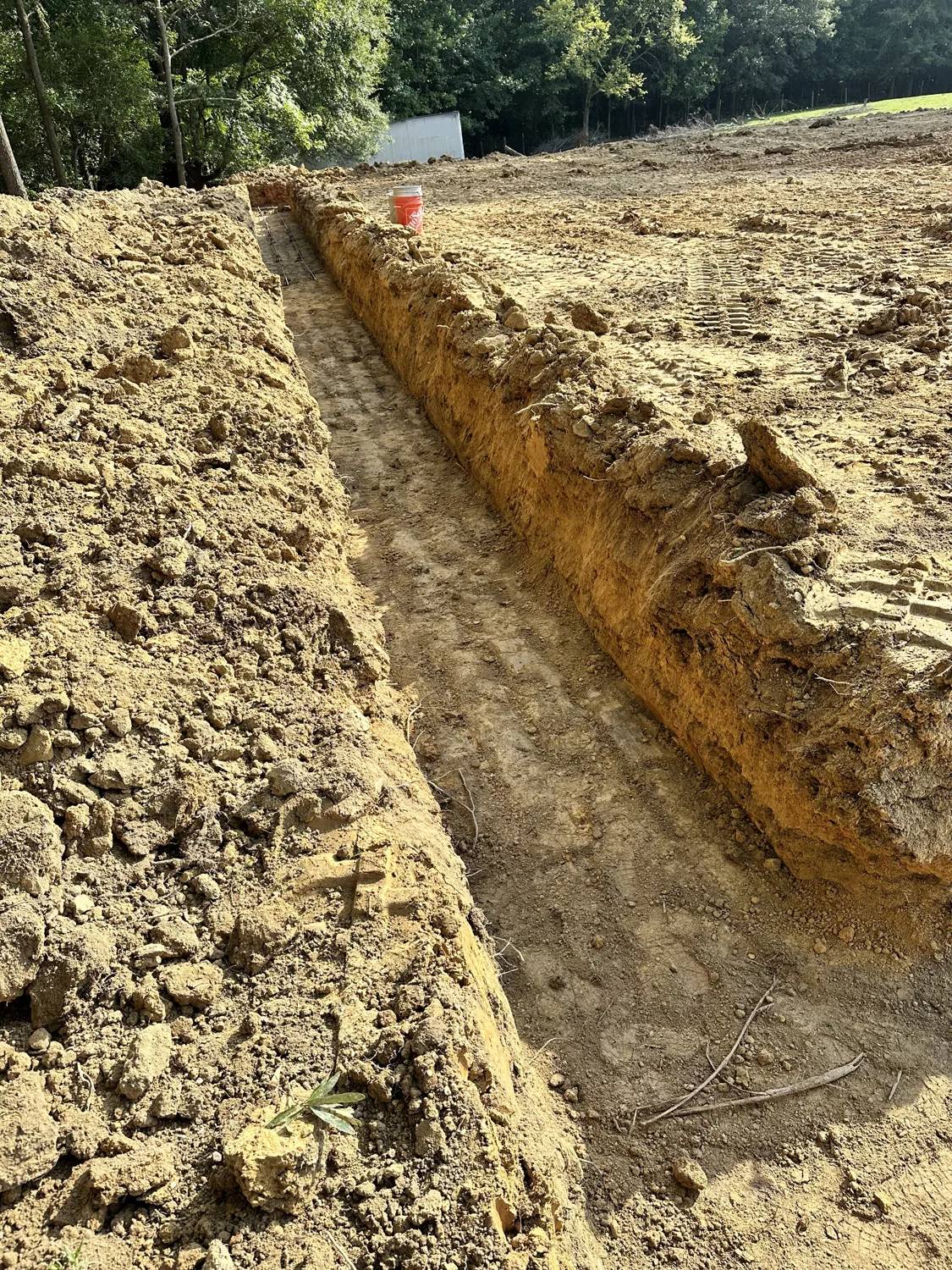
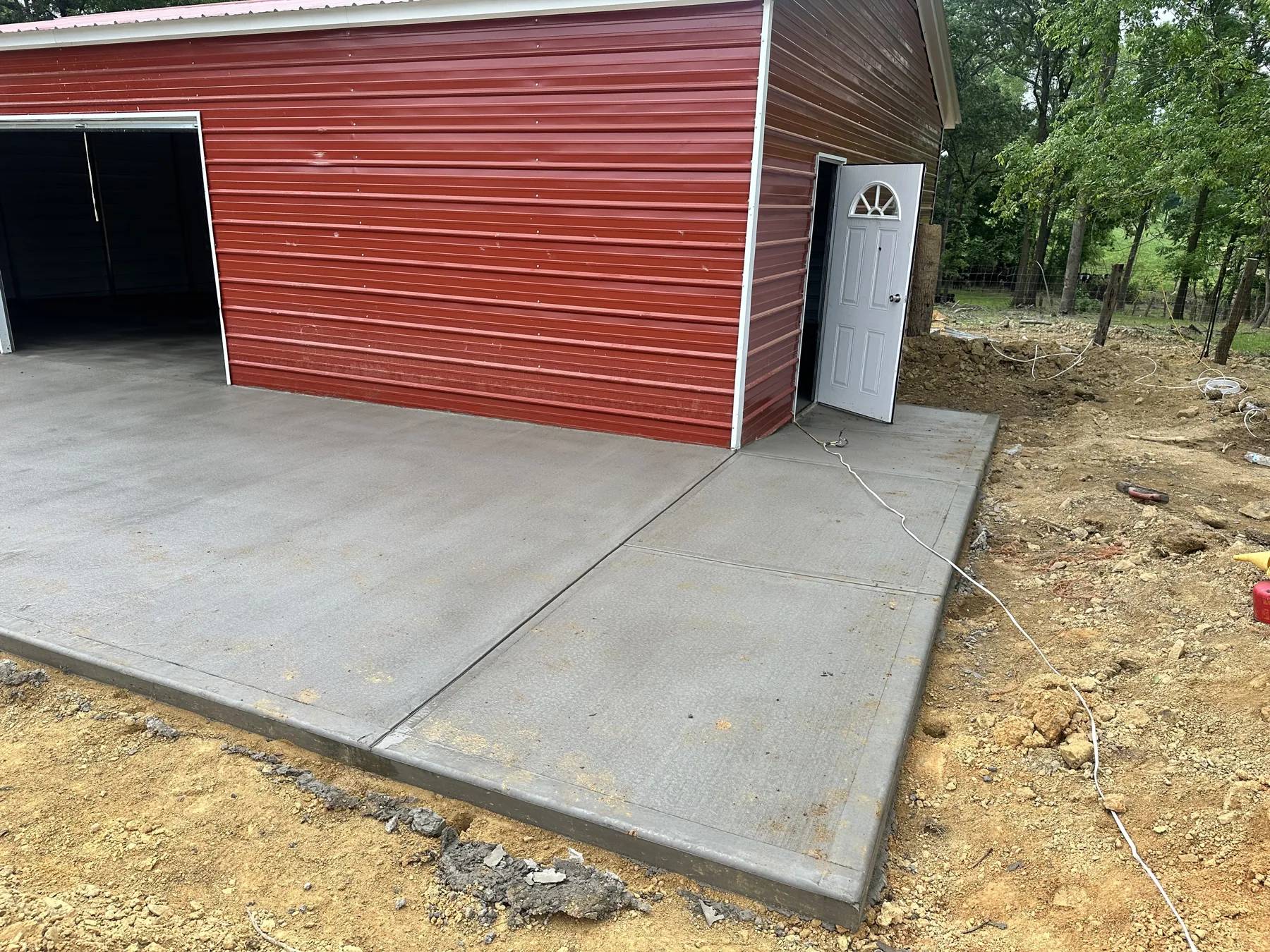
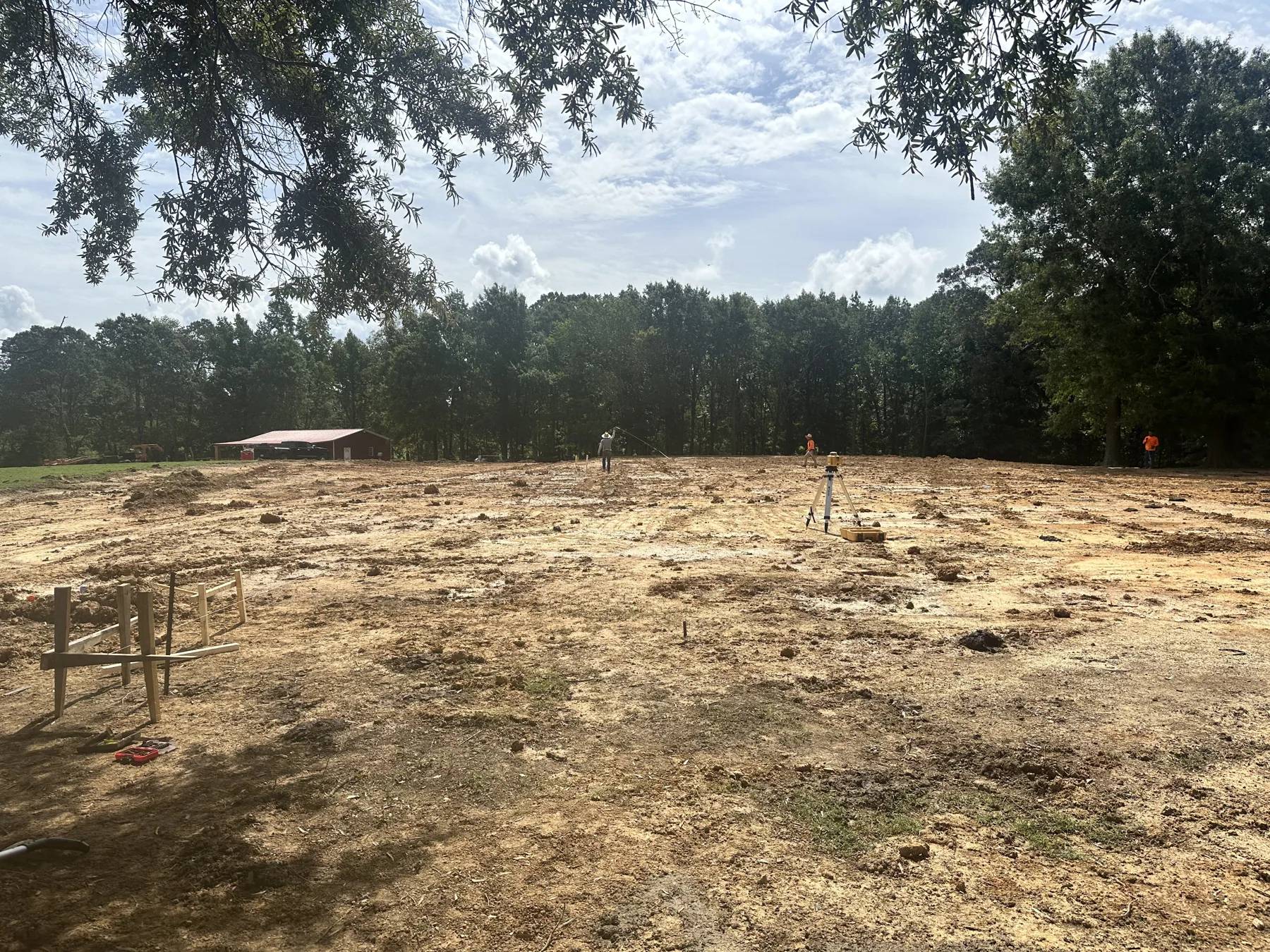
Land clearing result: open, graded acreage with exposed soil and mature trees left standingSkid steer on an exposed work site with freshly worked groundOvergrown wooded lot with dense understory and standing trees, the kind of ground forestry mulching opens upTrench excavation cut across a prepared dirt siteDriveway preparation: concrete apron beside a red outbuilding and graded open groundGraded open property bordered by a mature tree line, ready for the next stage of site workLand clearing result: open, graded acreage with exposed soil and mature trees left standingSkid steer on an exposed work site with freshly worked groundOvergrown wooded lot with dense understory and standing trees, the kind of ground forestry mulching opens upTrench excavation cut across a prepared dirt siteDriveway preparation: concrete apron beside a red outbuilding and graded open groundGraded open property bordered by a mature tree line, ready for the next stage of site work
04 / 6
Driveway Grading Across Charlotte and Union County
ETG Landwork, a Wingate-based site work contractor grades driveways across Monroe, Wingate, Marshville, Indian Trail, Stallings, Matthews, Mint Hill, Waxhaw, and Weddington, reaching Charlotte via US-74 and I-485. Long gravel drives on rural parcels in eastern Union County make up a lot of the work, along with new homesite driveways and concrete-ready subgrades for local crews.
Red clay is the reason so many local gravel driveways fail. Clay holds water, softens when it’s wet, and pushes gravel into the mud under traffic. A compacted, crowned subgrade with somewhere for the water to go is what keeps stone on top of the clay instead of mixed into it.
05 / 6
Why Charlotte Homeowners and Concrete Crews Choose ETG Landwork
Luis Gallardo learned grading, clearing, and excavation over about three years on a working farm, running skid steers, excavators, and a dozer, before he started ETG Landwork in July 2026. Concrete contractors in the area already rely on him to grade driveways before they pour, which means he grades to the specs the next crew needs. You can learn more about Luis and ETG Landwork. If the driveway is part of a new build, ETG also handles site preparation and house pads. For connections to state roads, the UNC School of Government explains how NCDOT driveway permits work. Estimates are free.
Good questions
Driveway Grading FAQs
Cost depends on driveway length and width, slope, how much clearing and cut-and-fill is needed, drainage work like culverts, and whether stone is included. A short regrade costs much less than a new quarter-mile rural drive. We give a written estimate after walking the route.
Remove vegetation and topsoil, compact the subgrade, crown it so water runs off, shape side drainage, and then lay base stone in compacted layers. On soft clay, geotextile fabric under the stone helps keep it from sinking.
Yes. Local concrete crews call Luis to grade their driveways before they pour. We grade and compact the subgrade to the depth and slope they specify.
Usually, yes. Washouts come from water running down or across the driveway instead of off it. Regrading with a proper crown, adding side ditches, and putting in a culvert where needed fixes the cause, not just the symptom.
Yes. Steep driveways need extra attention to drainage, since fast water carries gravel off. We may add turnouts or diversion swales, and sometimes recommend concrete for the steepest section.
If the driveway connects to a state-maintained road, NCDOT’s driveway rules apply and the local district office decides what’s required. City and county roads follow local rules. We’ll help you check before work starts.
Whether it’s a new gravel drive or a concrete subgrade, start with a walk of the route. Call or request a free driveway grading estimate, and Luis will come take a look.