Services

Land Clearing Services in Wingate, NC

Most raw land around Charlotte starts the same way: loblolly pine, sweetgum saplings, and a wall of Chinese privet standing between you and a house pad, a driveway, or a usable back acre. ETG Landwork provides land clearing services for homeowners, builders, and commercial developers across Charlotte and Union County, from wooded tracts near Mint Hill to old farm parcels along US-74 outside Monroe. We clear what you need gone, protect the trees you want kept, and leave ground that is ready for the next trade instead of a field of stumps and brush piles. Owner Luis Gallardo walks every property himself before he quotes it, so the price you get matches the work you actually need.

  • Free Estimates
  • Owner-Operated
  • Residential & Commercial Projects

Related land clearing services

01 / 5

What Land Clearing Actually Involves

Land clearing is the removal of trees, brush, stumps, and root mass from a piece of ground so it can be built on, graded, fenced, or farmed. On an overgrown lot you can barely walk through, the work runs in a set order. First comes layout: marking property lines, tree-save areas, and underground utilities located through NC 811. Next is cutting and felling, where standing timber comes down and brush is pushed, piled, or mulched. Then comes grubbing, which means pulling the stumps and the root balls beneath them. That step matters more than most people realize, because roots left under a slab or driveway rot over time and leave voids that settle and crack whatever sits on top. Finally, debris is hauled off, processed on site, or handled under the state’s burning rules, and the exposed soil is rough-graded so it sheds water instead of pooling.

Most of this work is done with a compact track loader running a root grapple, a brush cutter, or a forestry mulching head, with a larger excavator brought in for big stumps and heavy timber. You don’t need to be on site while we work; we keep you updated and walk the finished area with you. What you’re left with is open, stump-free ground with clear boundaries, ready for a surveyor, a grading crew, or your builder.
02 / 5

Our Land Clearing Process

  1. Step 1: Site Walk and Clearing Plan

    Luis walks the property with you and flags the trees you want saved, the areas to clear, and any wet spots, steep slopes, or creek buffers. He notes equipment access, soil conditions, and where debris can realistically go. You get a written estimate that spells out what will be cleared, what will be grubbed, and what happens to the material. There are no vague “clear the lot” line items, so there are no surprises when the work starts.

  2. Step 2: Utilities, Permits, and Layout

    Before a machine moves, we request an NC 811 locate so buried power, gas, water, and fiber lines are marked. We also confirm with you whether your project needs an approved erosion and sedimentation control plan, and whether your site plan shows tree-save areas we have to protect. Inside Charlotte city limits, trees in the public right-of-way carry their own protections. Sorting this out up front is what keeps a project from getting stopped halfway through by an inspector.

  3. Step 3: Cutting, Felling, and Brush Removal

    Standing trees are dropped in a controlled direction, away from houses, fences, and overhead lines, then cut to manageable lengths. Privet, briars, vines, and small saplings are cut down or mulched in place. Trees you asked us to keep get their root zones protected so equipment doesn’t compact the soil over them. By the end of this step you can see the real shape of your property for the first time.

  4. Step 4: Grubbing and Debris Handling

    Stumps are pulled out with the root ball attached, and the holes are backfilled and compacted so they don’t sink later. Brush and trunks are hauled to a permitted facility or processed on site, depending on your plans and what your site allows. On most suburban Charlotte lots, hauling or mulching is the practical choice, because the state’s setback rules rule out burning on tight parcels. You end up with a site that is free of the buried wood that causes settlement problems under slabs and driveways.

  5. Step 5: Rough Grade and Final Walkthrough

    We rough-grade the cleared area so it sheds water, smooth out the tracks and ruts left by equipment, and leave any required erosion measures, such as silt fence, in place. Then we walk the site with you to confirm every flagged tree is standing and every cleared area matches the plan. If the next step is a house pad, a driveway, or grading, the ground is ready for it. What was an impassable tangle of brush is now a buildable, usable property.

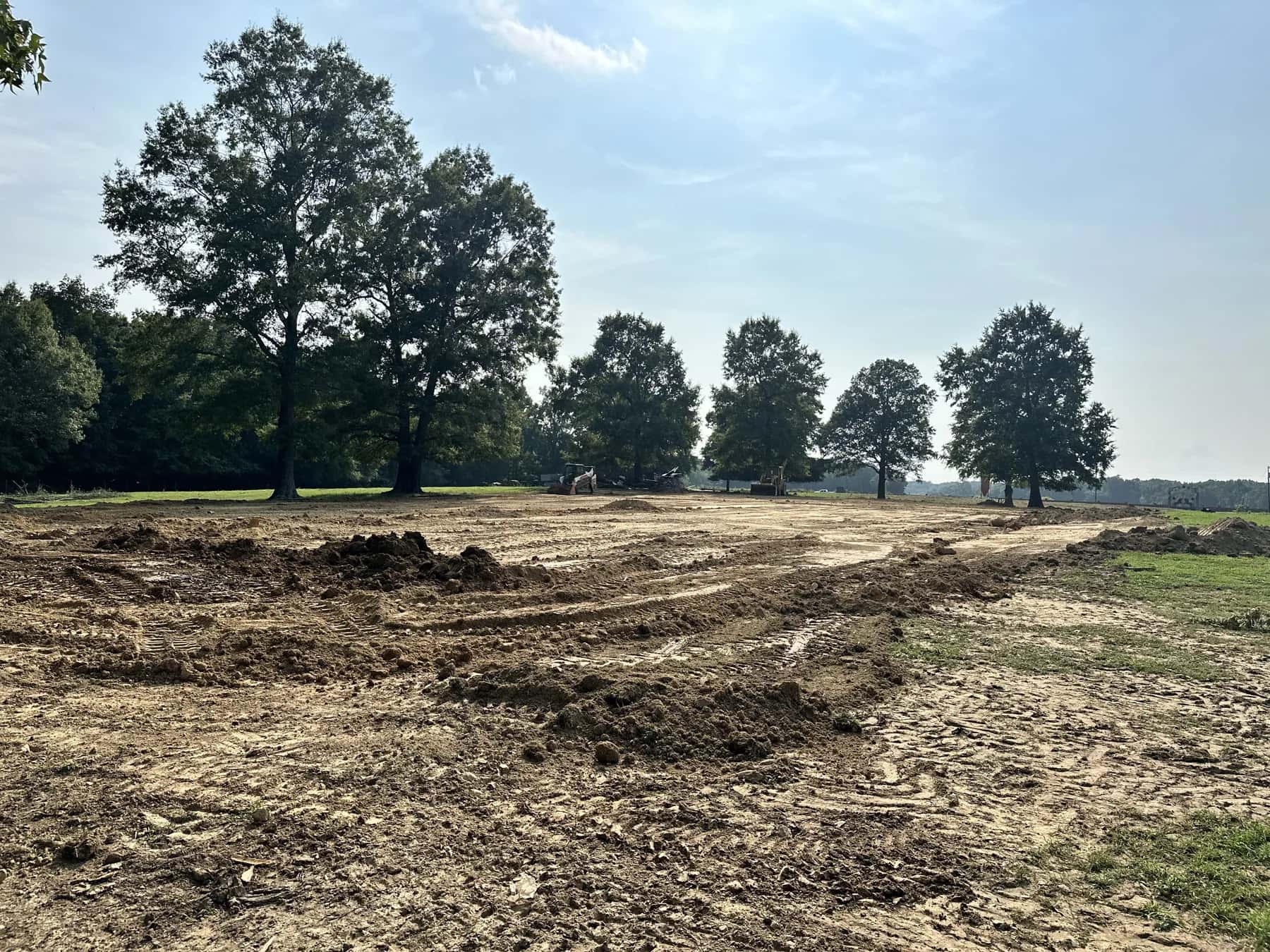
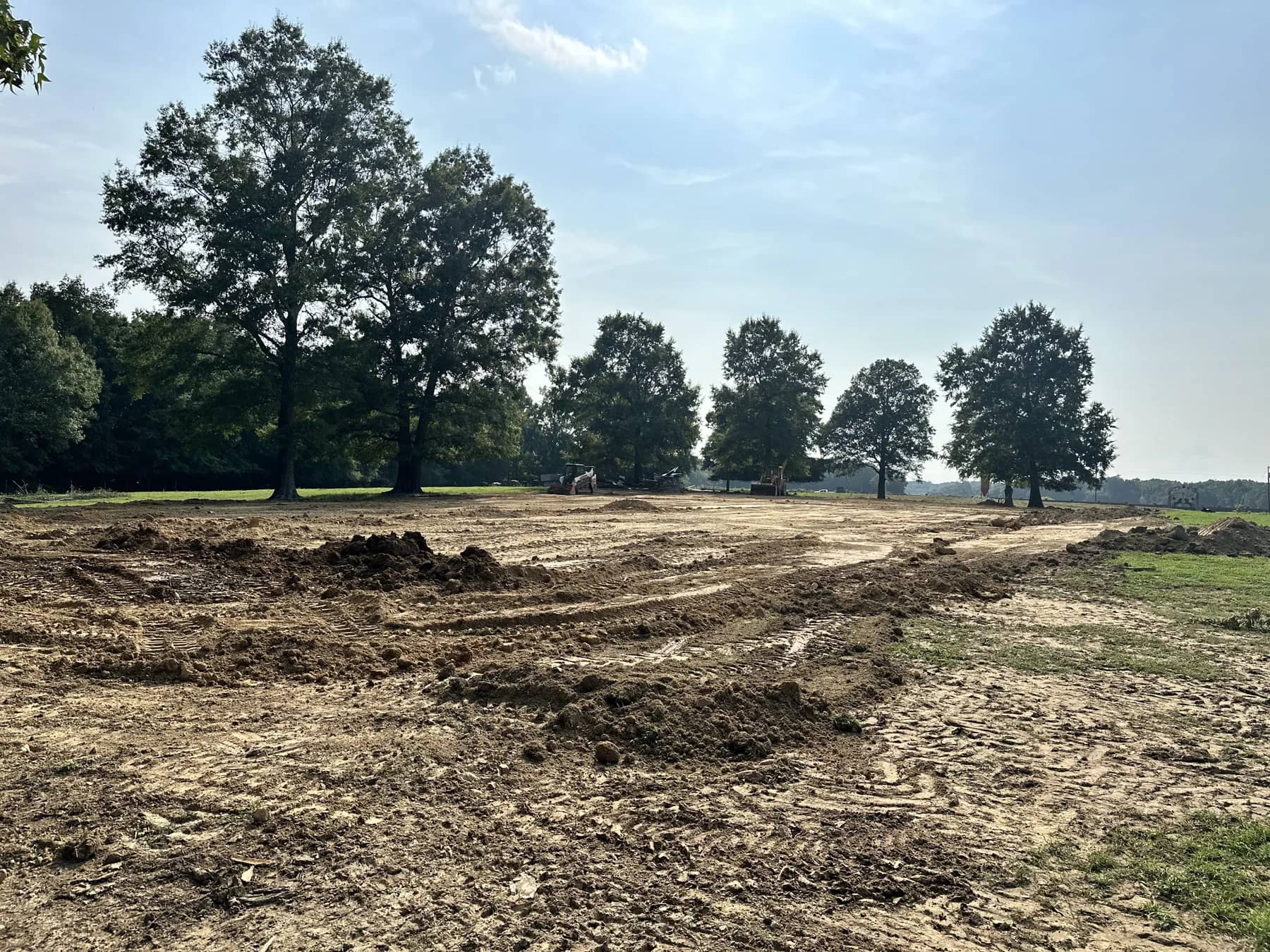
Land clearing result: open, graded acreage with exposed soil and mature trees left standing
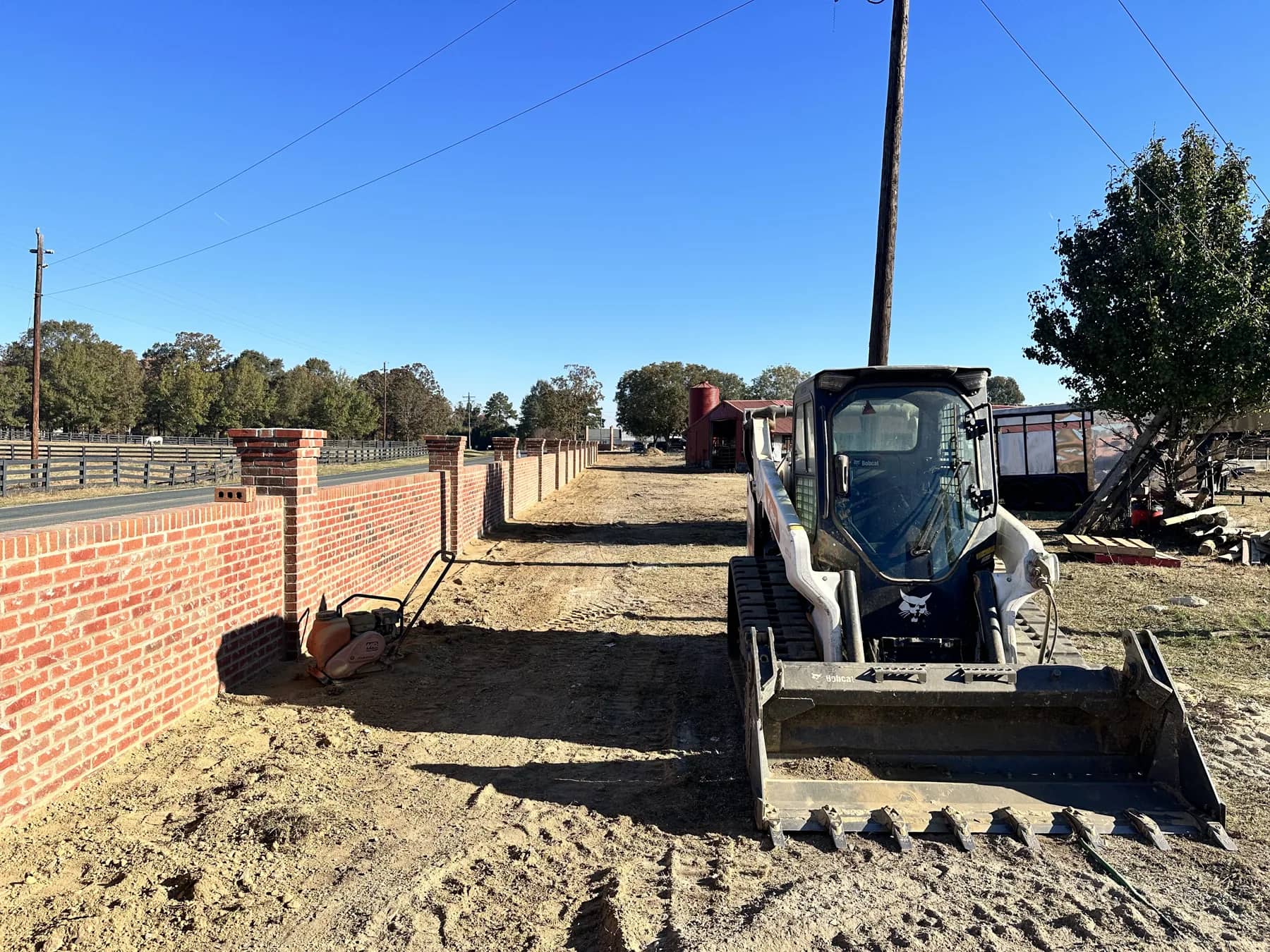
Skid steer on an exposed work site with freshly worked ground
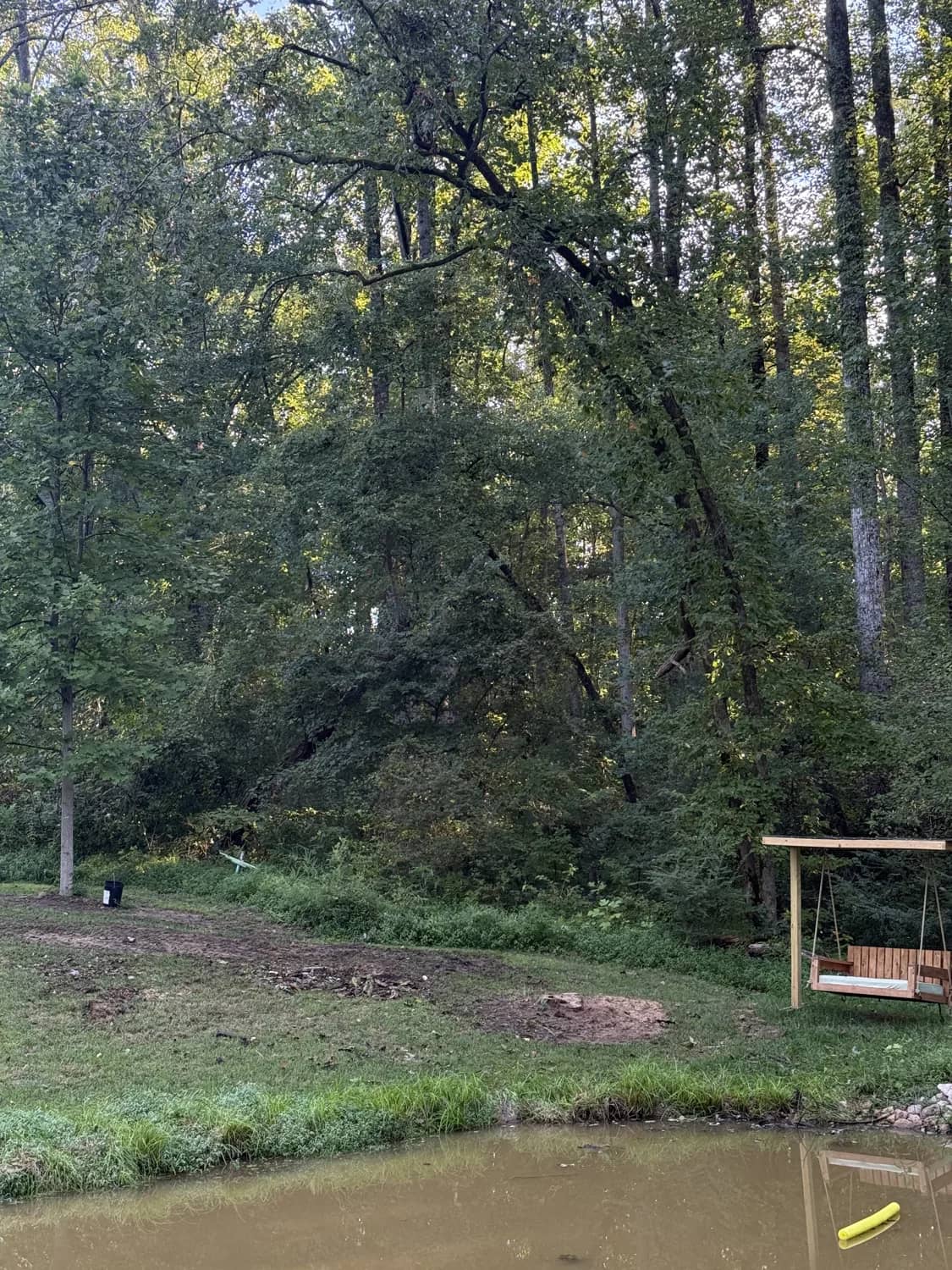
Overgrown wooded lot with dense understory and standing trees, the kind of ground forestry mulching opens up
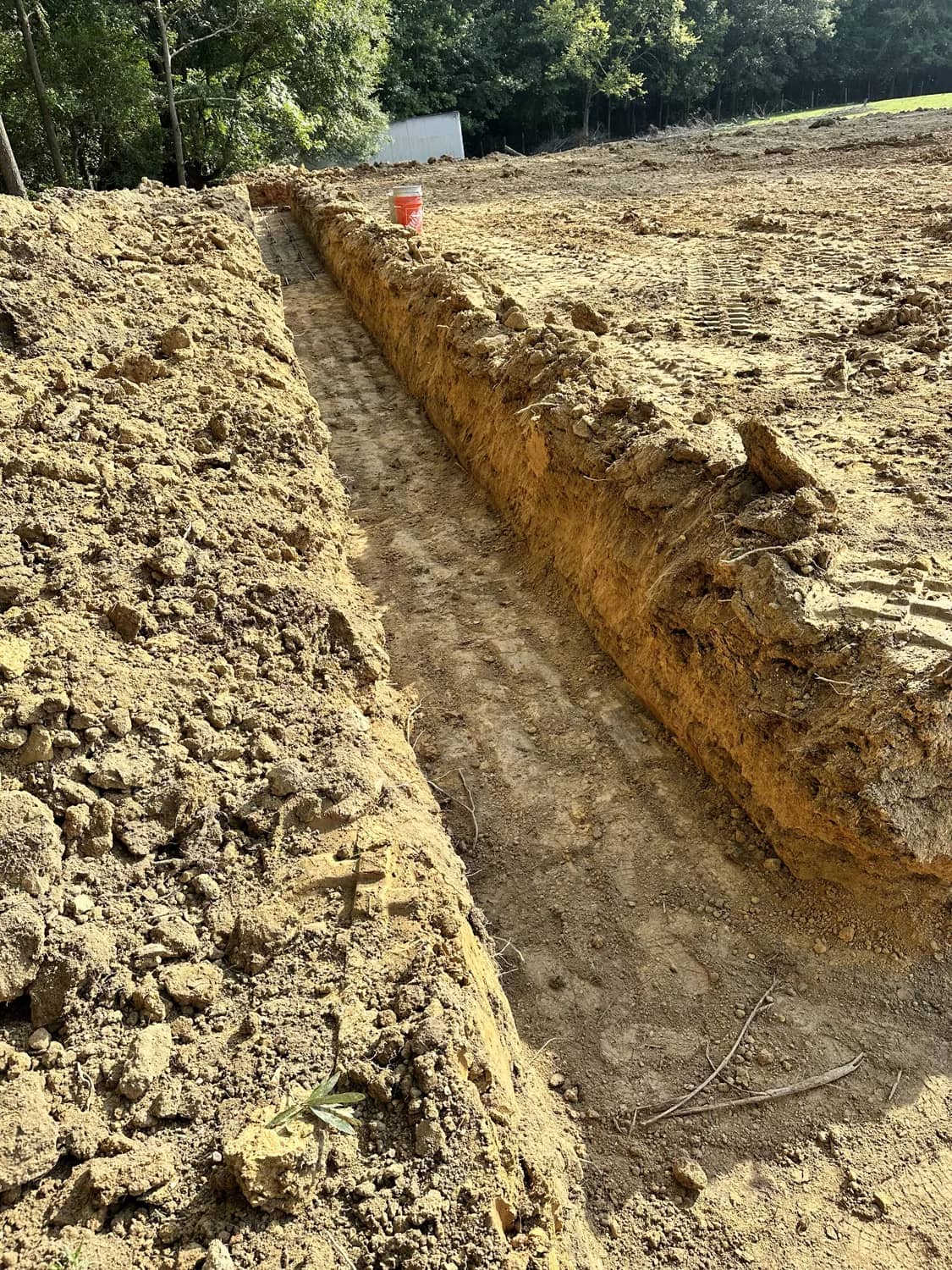
Trench excavation cut across a prepared dirt site
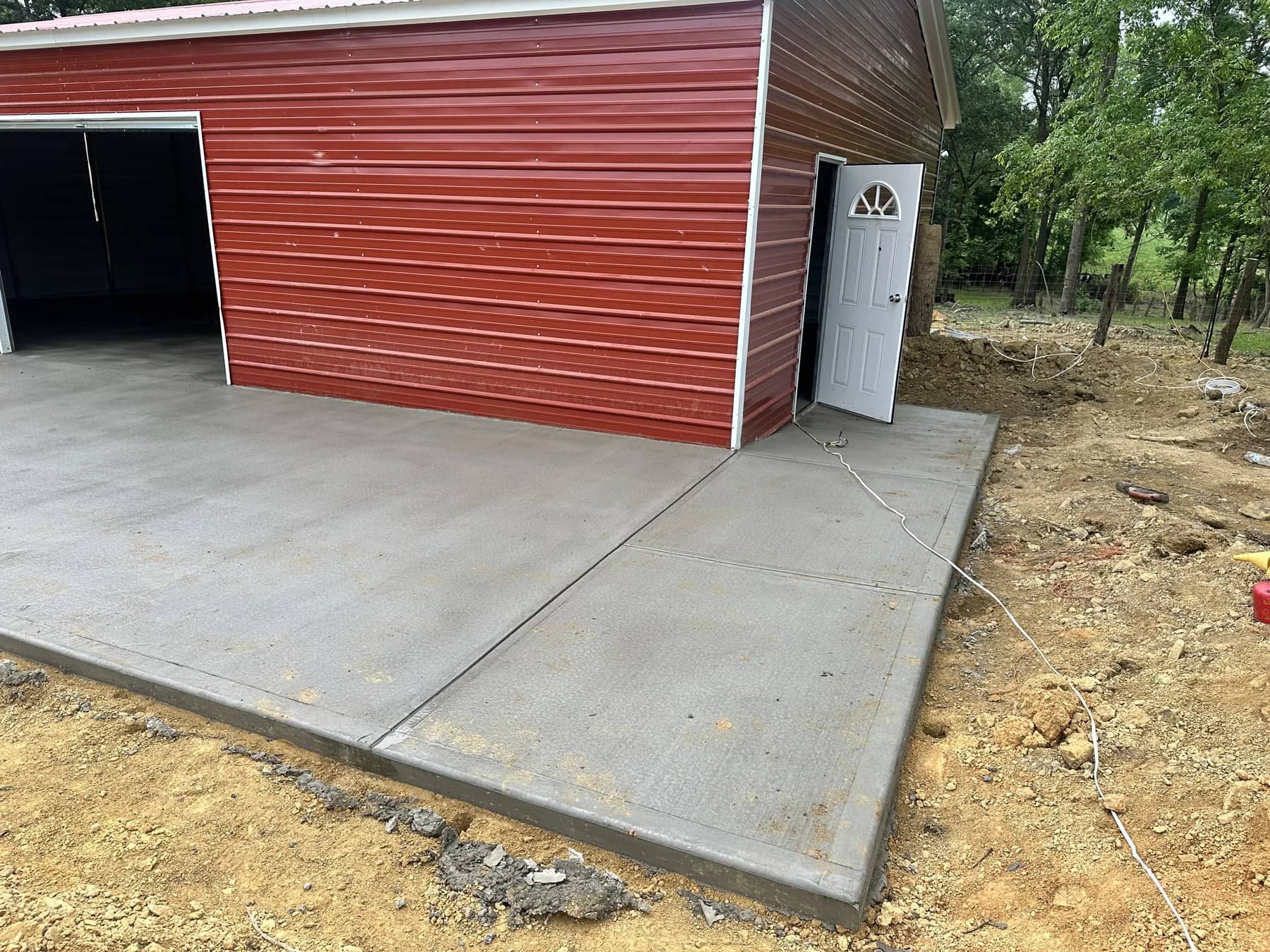
Driveway preparation: concrete apron beside a red outbuilding and graded open ground
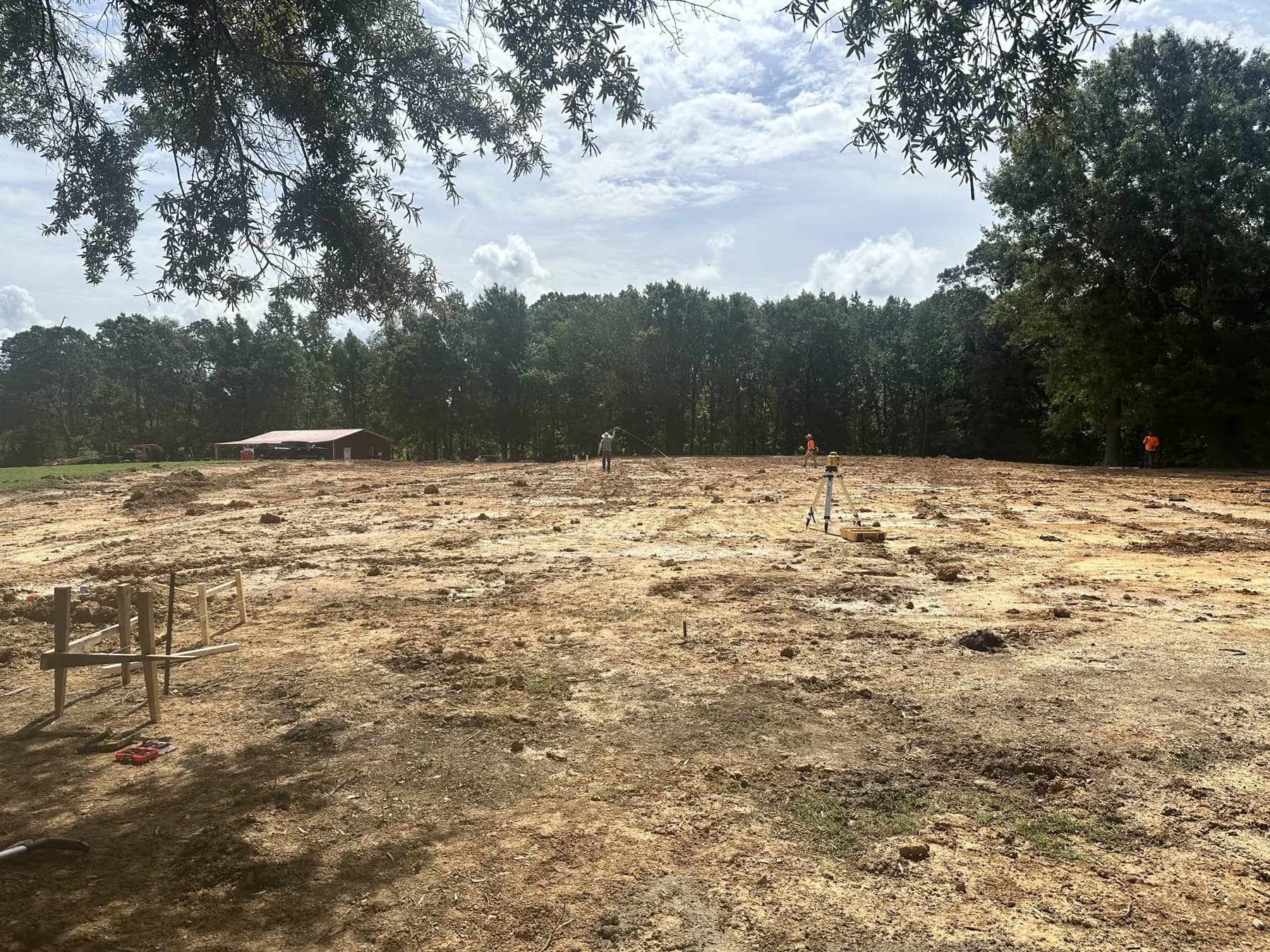
Graded open property bordered by a mature tree line, ready for the next stage of site work
03 / 5

Serving Charlotte and the Surrounding Area

ETG Landwork is based in Wingate, and US-74 and the Monroe Expressway put us within easy reach of I-485 and the whole east side of the metro. ETG Landwork, owner-operated, regularly clears lots in Monroe, Indian Trail, Stallings, Matthews, and Mint Hill, and works south toward Waxhaw and Weddington, where old pasture and hardwood tracts are being turned into homesites. Inside Charlotte, we take on residential and commercial clearing from the Ballantyne and Steele Creek areas to University City and the wooded east side near Reedy Creek Nature Preserve.

Ground conditions here shape how we clear. Most of the region sits on Piedmont red clay, and much of Union County lies in the Carolina Slate Belt, where rock can sit close to the surface and slow down stump removal. Bare clay also erodes fast in a summer thunderstorm. That is why we sequence clearing so soil isn’t left exposed any longer than necessary, and we rough-grade as we go instead of leaving the whole site open at once.

04 / 5

Why Charlotte Property Owners Choose ETG Landwork

When you call ETG Landwork, you talk to the owner, and the owner runs the machine. Luis Gallardo learned land clearing, grading, and demolition over about three years on a working farm, running skid steers, excavators, and a dozer, before he launched ETG Landwork in July 2026. That background means he reads a site the way an operator does. He can tell which trees will come down clean, where roots will fight back, and where equipment will tear up the ground if it isn’t planned right. You can learn more about Luis and how ETG Landwork got started.

We are straightforward about the rules because they affect your budget and your timeline. In North Carolina, any project that disturbs more than one acre needs an approved erosion and sedimentation control plan, and that plan has to be submitted at least 30 days before work begins, according to the NC Department of Environmental Quality. If you’ve been told to just burn the brush, check the setbacks first. The state’s open burning rules require land-clearing burn piles to sit at least 500 feet from occupied structures, and burning is only allowed on Code Green or Code Yellow air-quality days. In Mecklenburg County, the County Fire Marshal’s Office also has to issue a permit. We’ll tell you plainly which option fits your lot.

Every estimate is free, and we work residential and commercial jobs alike, from a single homesite to a larger development tract.

Good questions

Land Clearing FAQs

Cost depends on how dense the vegetation is, the size of the trees, whether stumps are grubbed or cut flush, how the debris is handled, and how easily equipment can get in. A lot of mostly brush and small pines costs far less per acre than mature hardwoods that need full stump removal and haul-off. We price every job after walking the site so the number reflects your property, not an average.

Prefer to talk it through? Call (980) 328-5311

Let’s get moving

Ready to Clear Your Property?

Whether it’s a single homesite in Indian Trail or a multi-acre tract outside Charlotte, the first step is a site walk. Request a free land clearing estimate online, and Luis will set a time to see the property in person.

Call nowFree estimate